Walkthrough
What this was
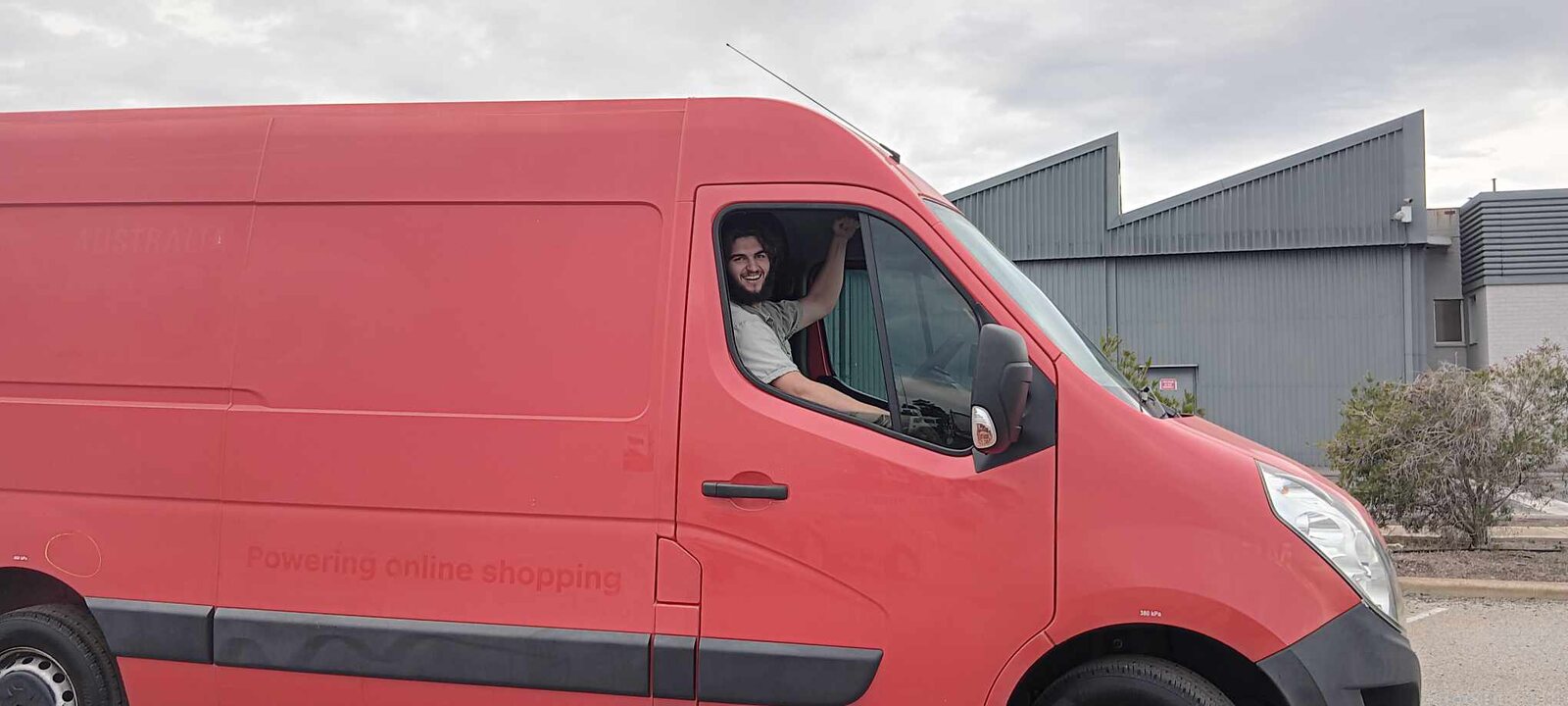
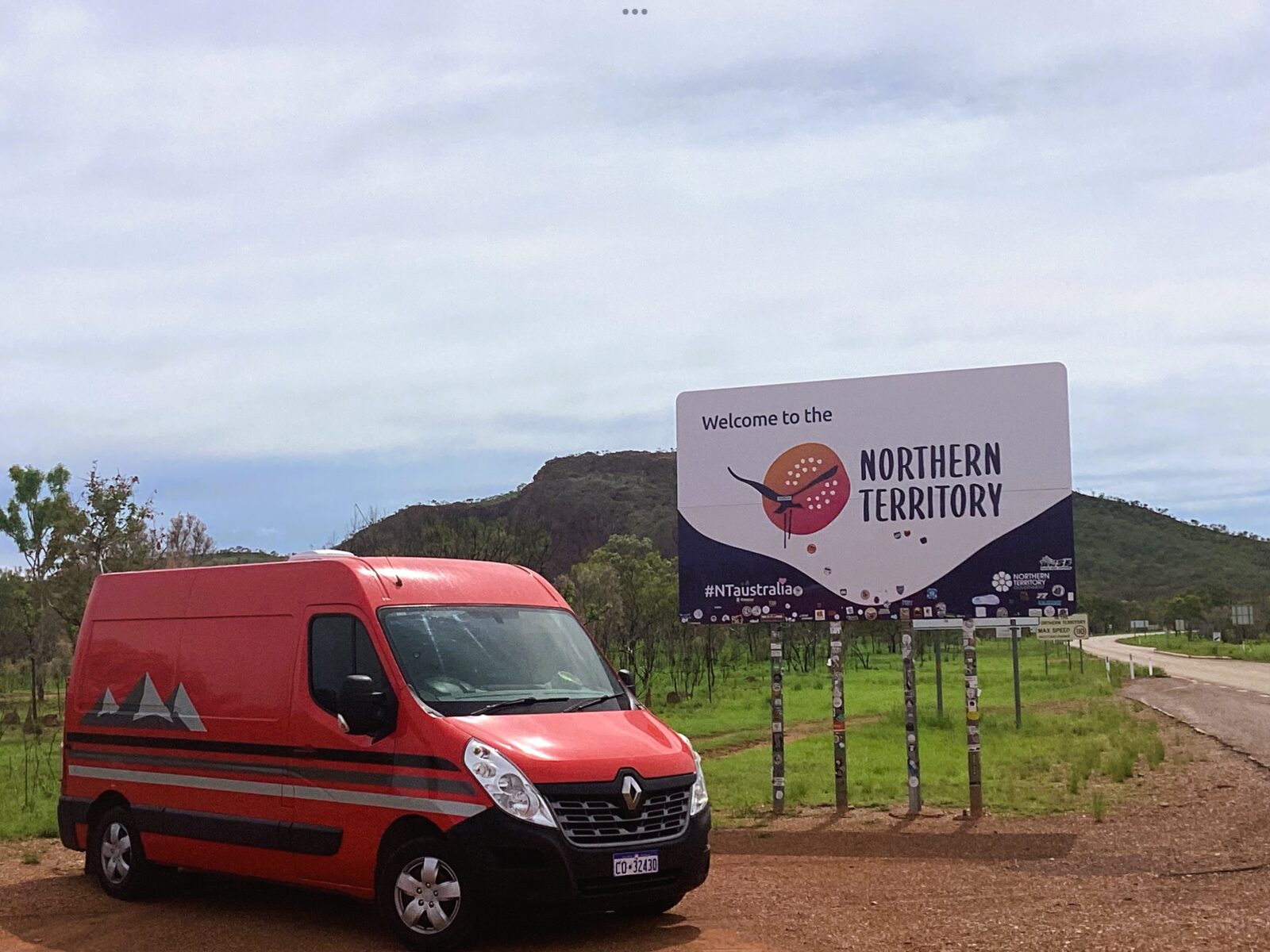
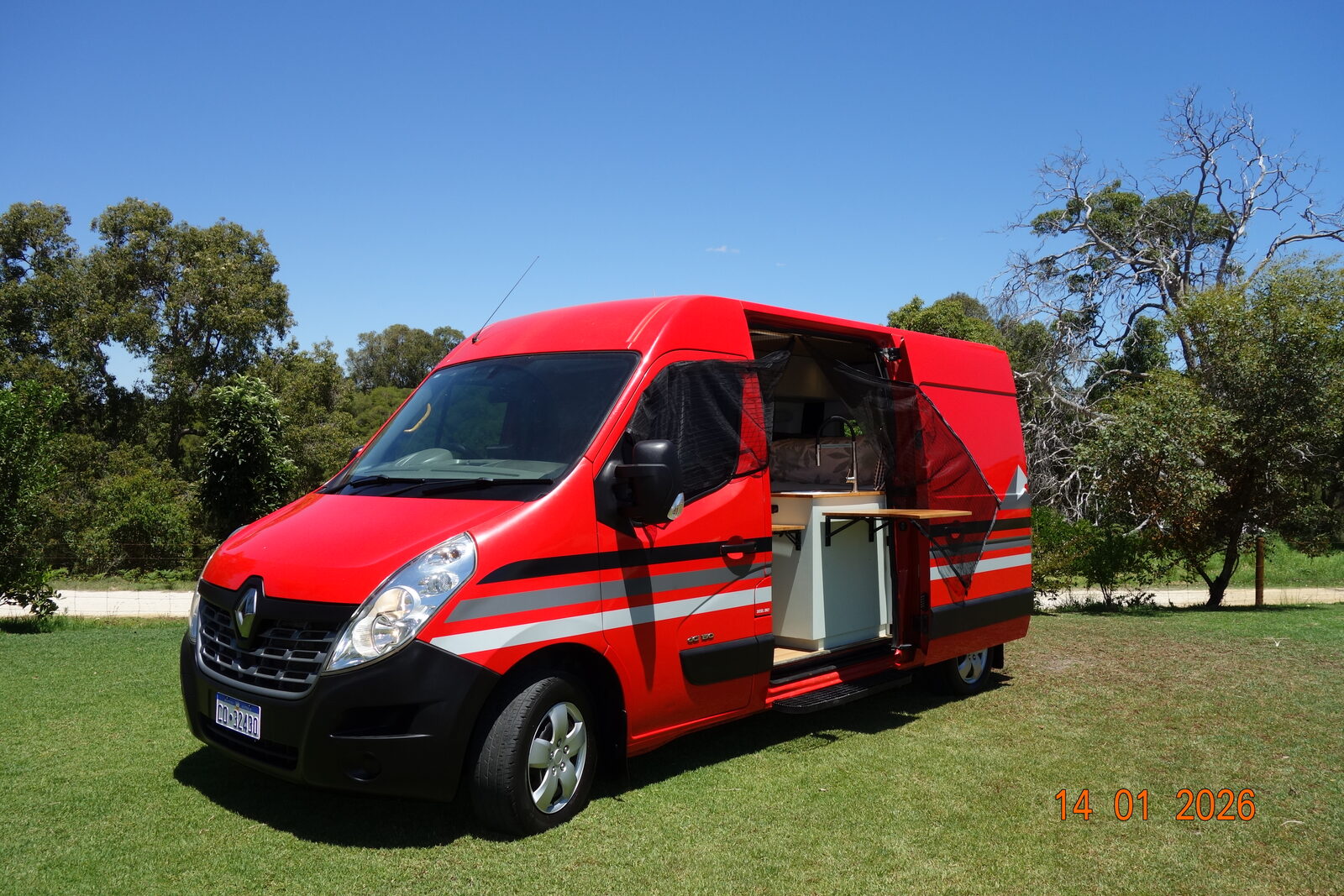
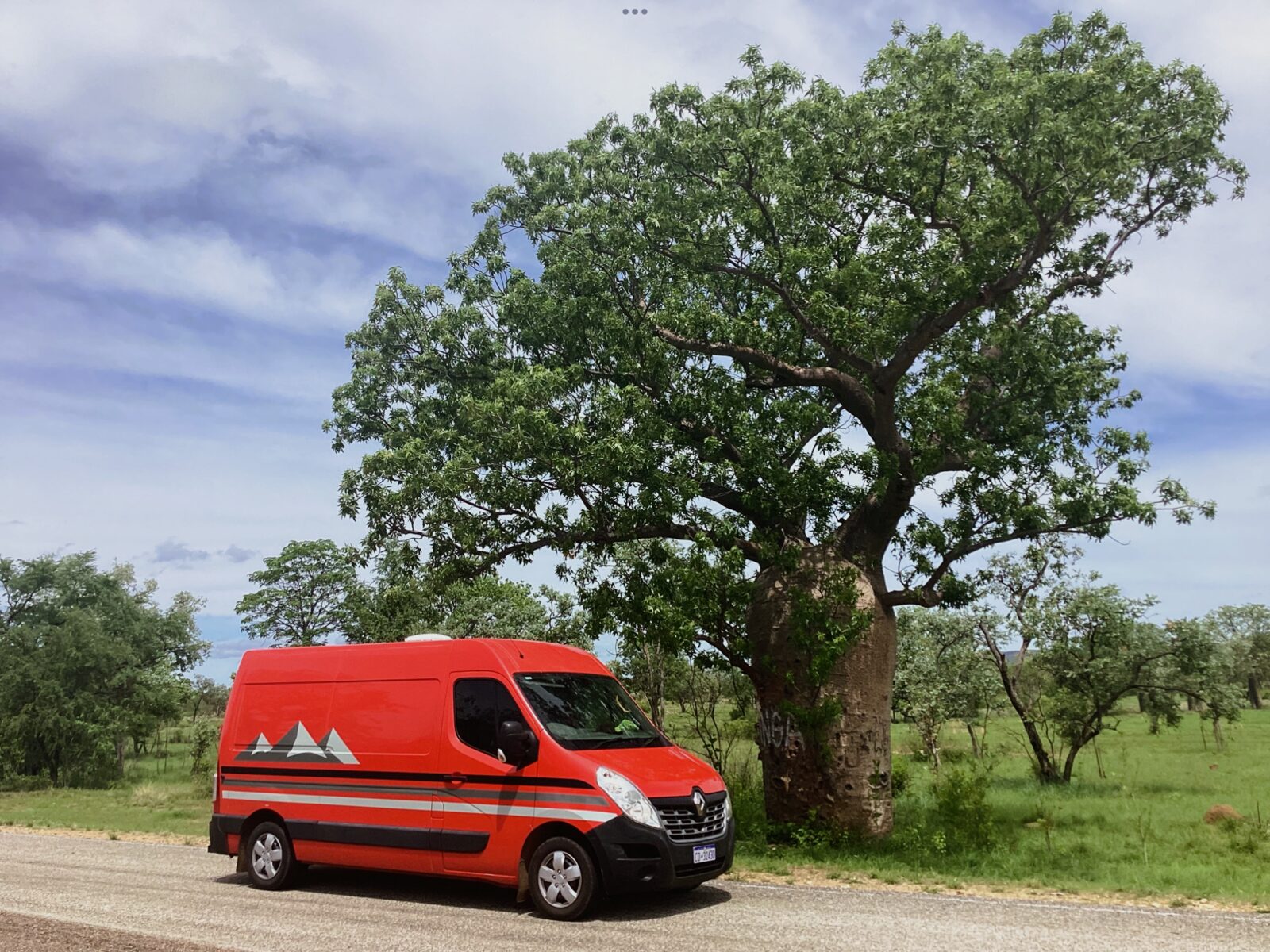
I bought a high-roof Renault Master panel van that was not registered, fitted out the back of it as a campervan, had it inspected and licensed, and put it to the test by taking it to the top of Australia and back.
Finished
The van
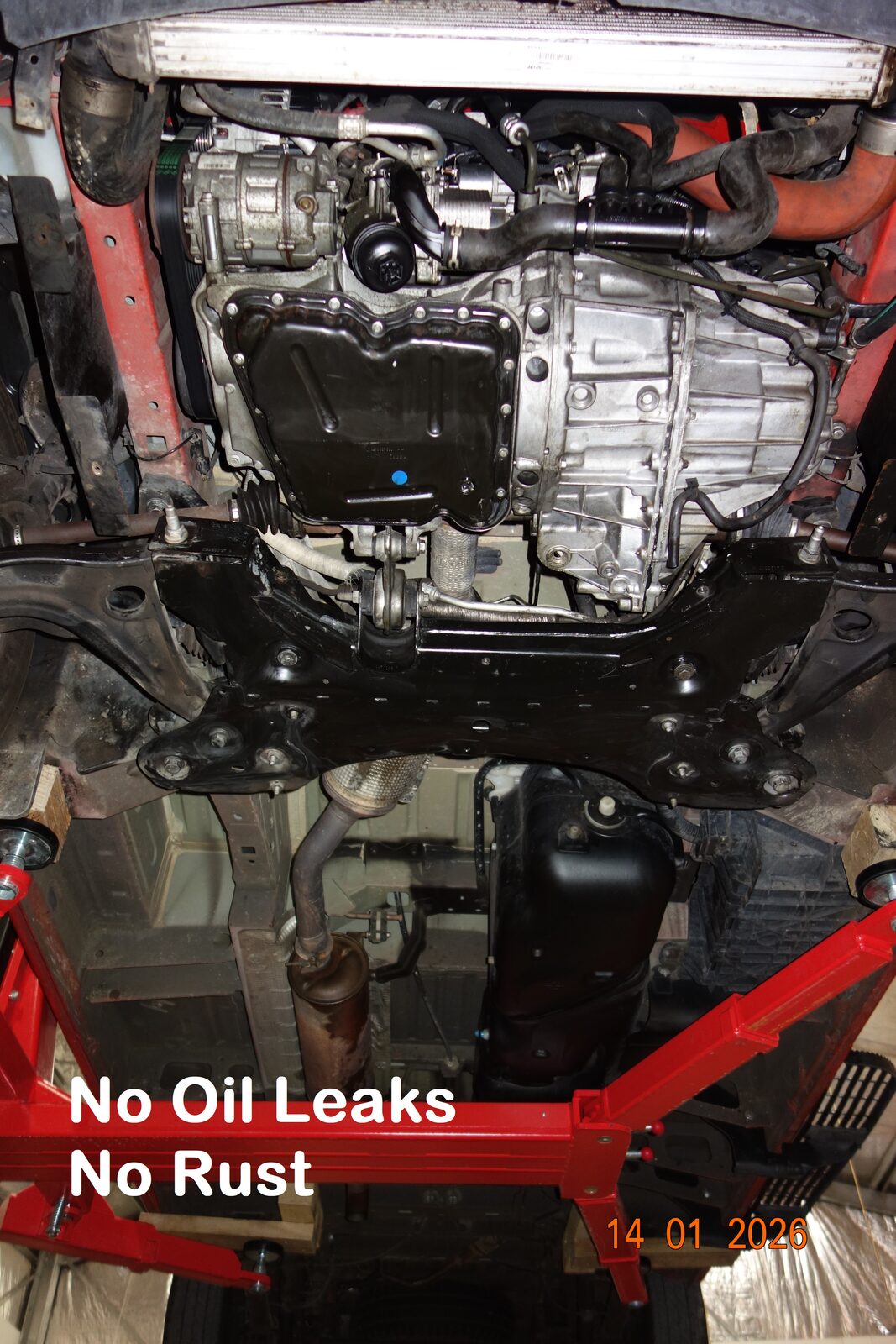
| Vehicle | 2016 Renault Master, medium wheelbase, high roof (L2H2) panel van |
|---|---|
| Engine | 2.3 litre twin-turbo diesel |
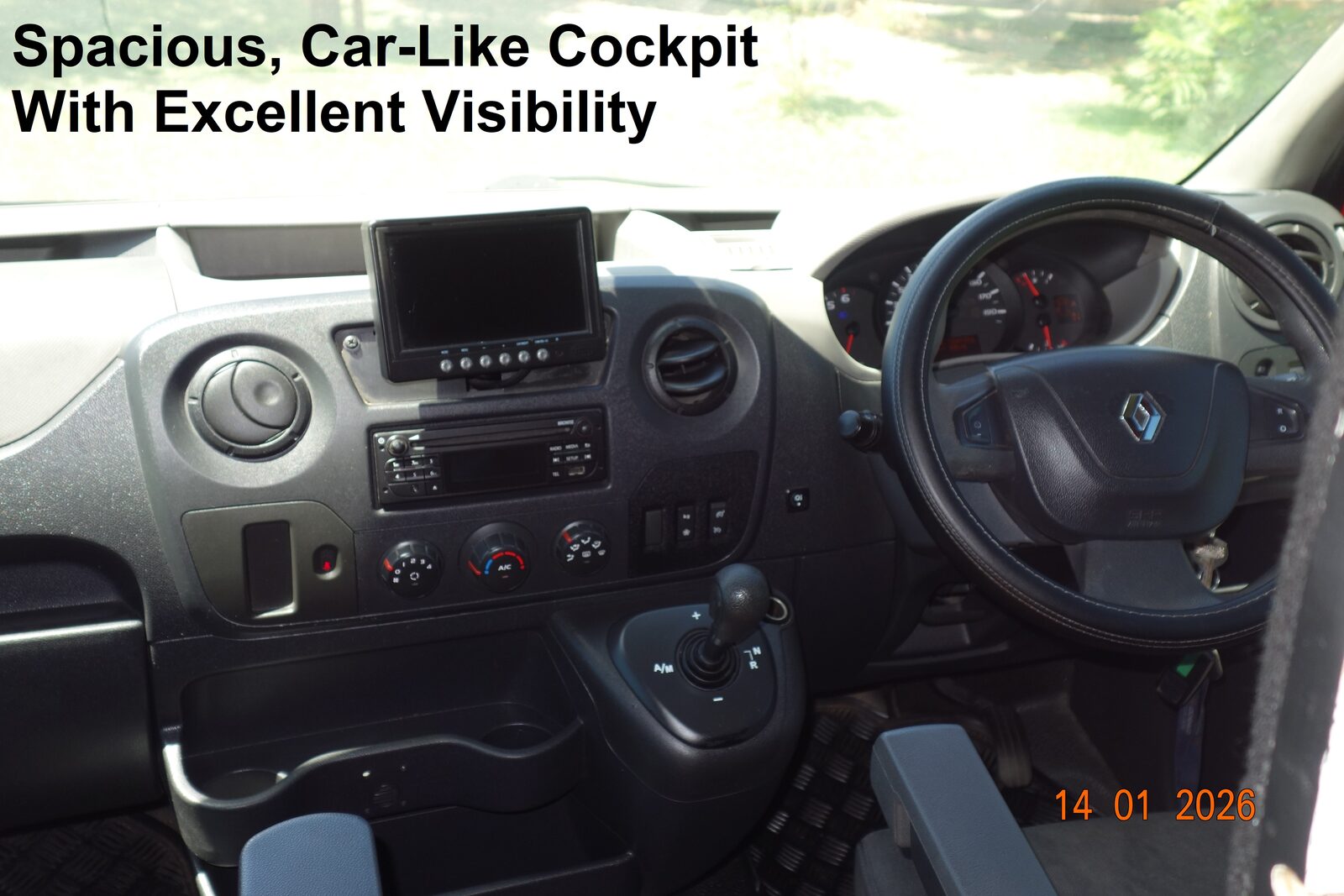
| Transmission | Six-speed automated manual |
| Weight | 3,510 kg gross — drivable on a normal car licence |
| Standing height | 1.85 m inside |
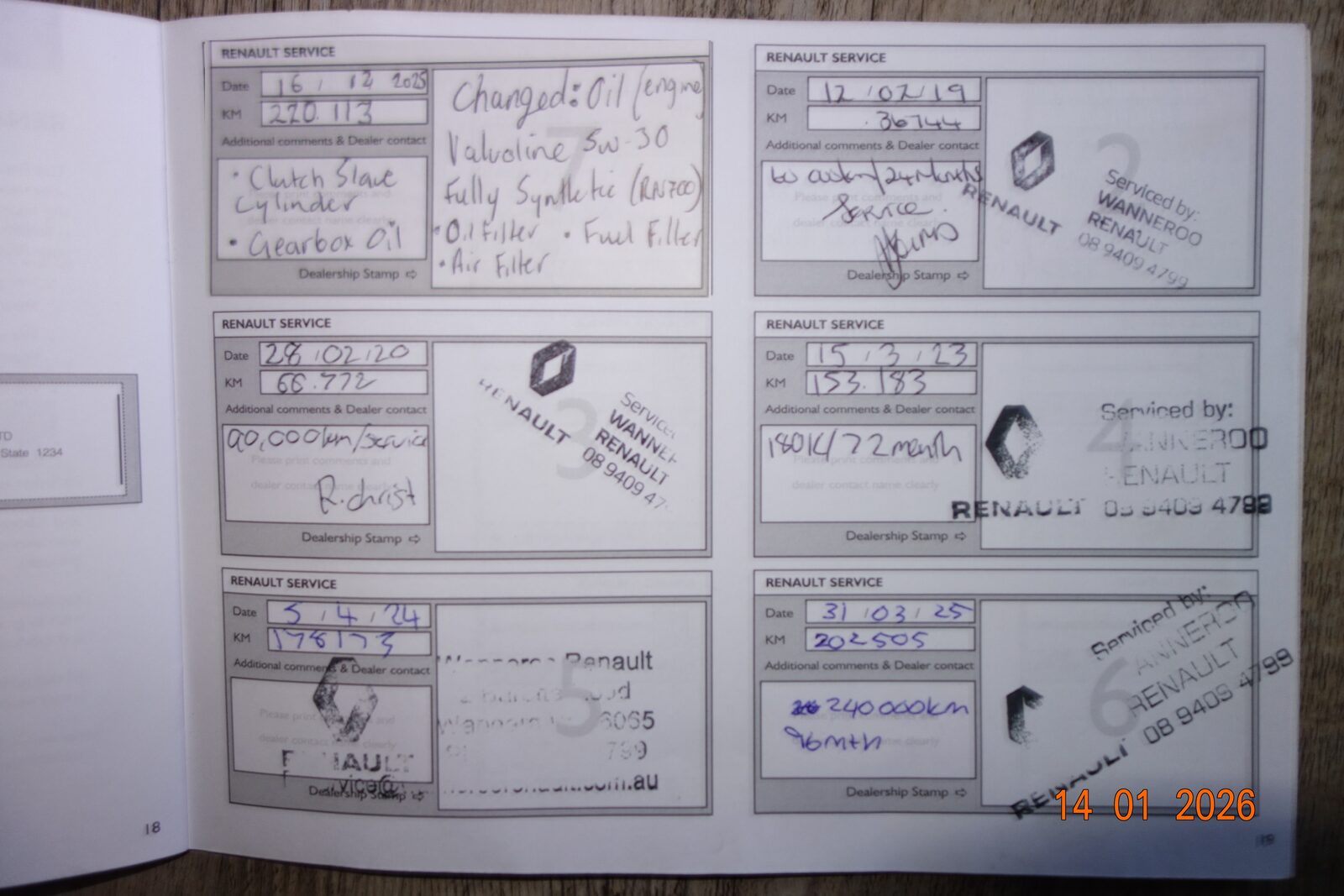
| Distance | About 220,000 km at the point of sale |
| Registration | Western Australia, licensed to June 2026 |
Before
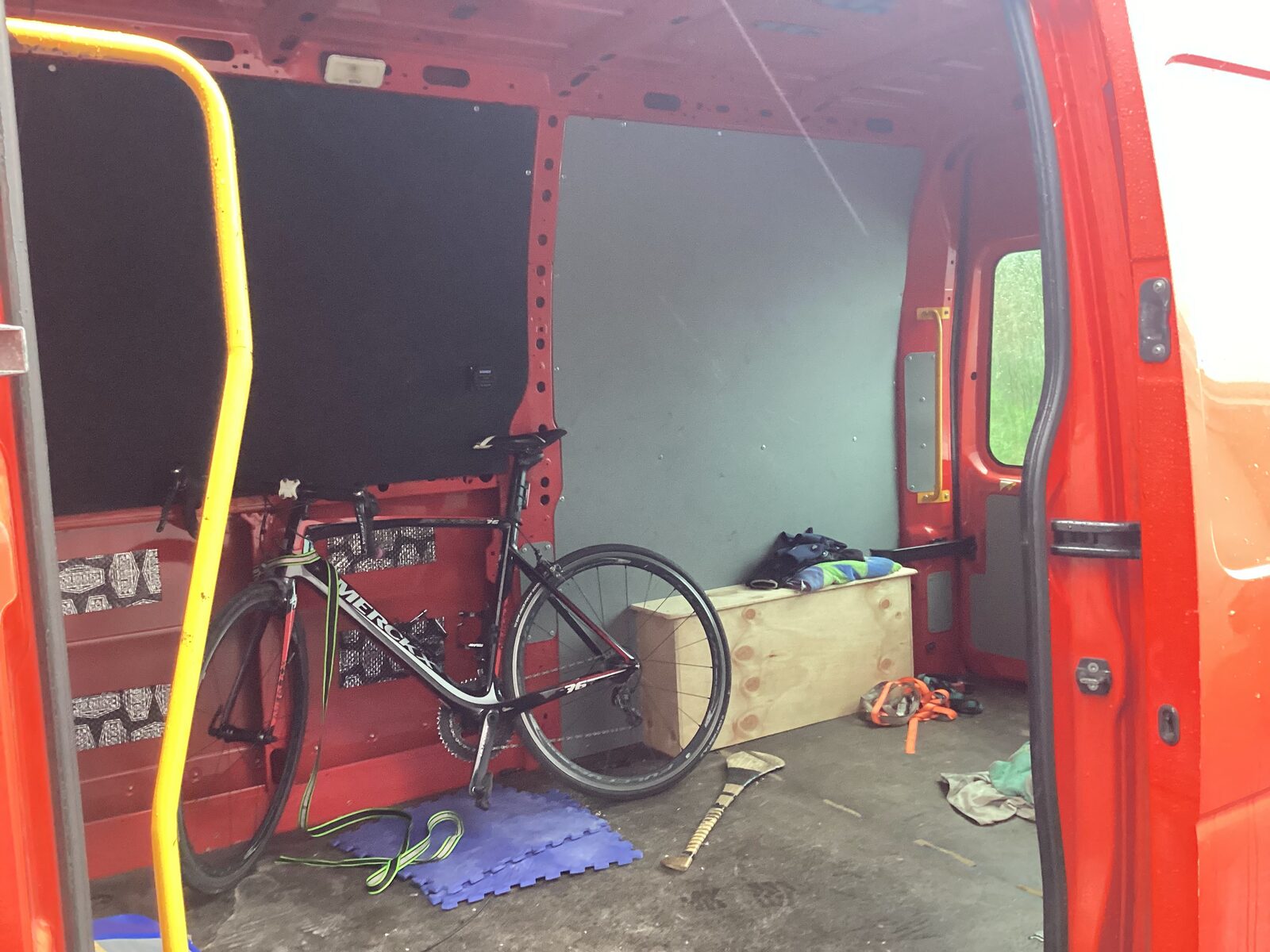
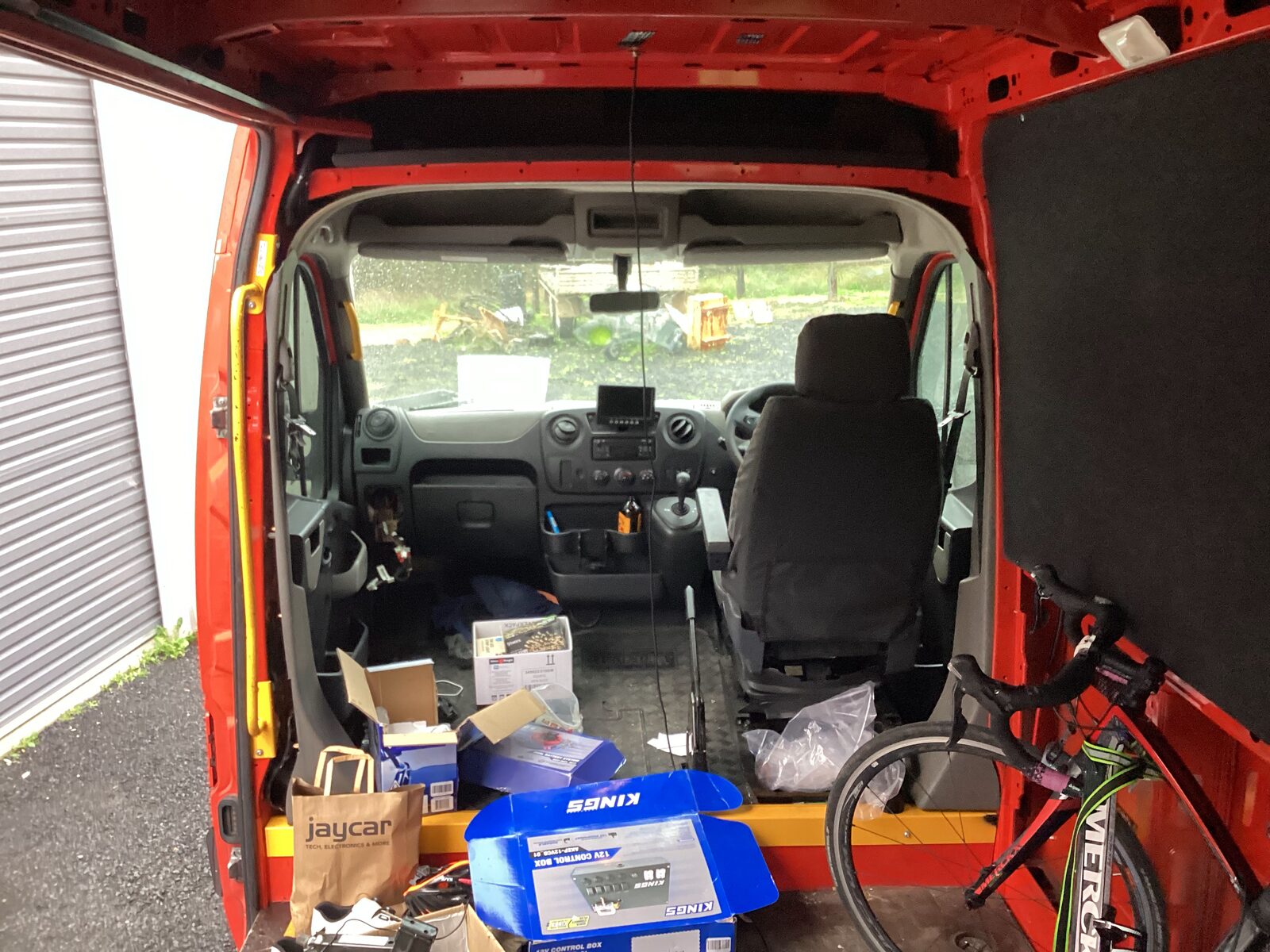
It came as a bare load area: ribbed steel walls, a plywood floor, no lining, no windows in the back, no power, and one seat.
What I built
Fit-out
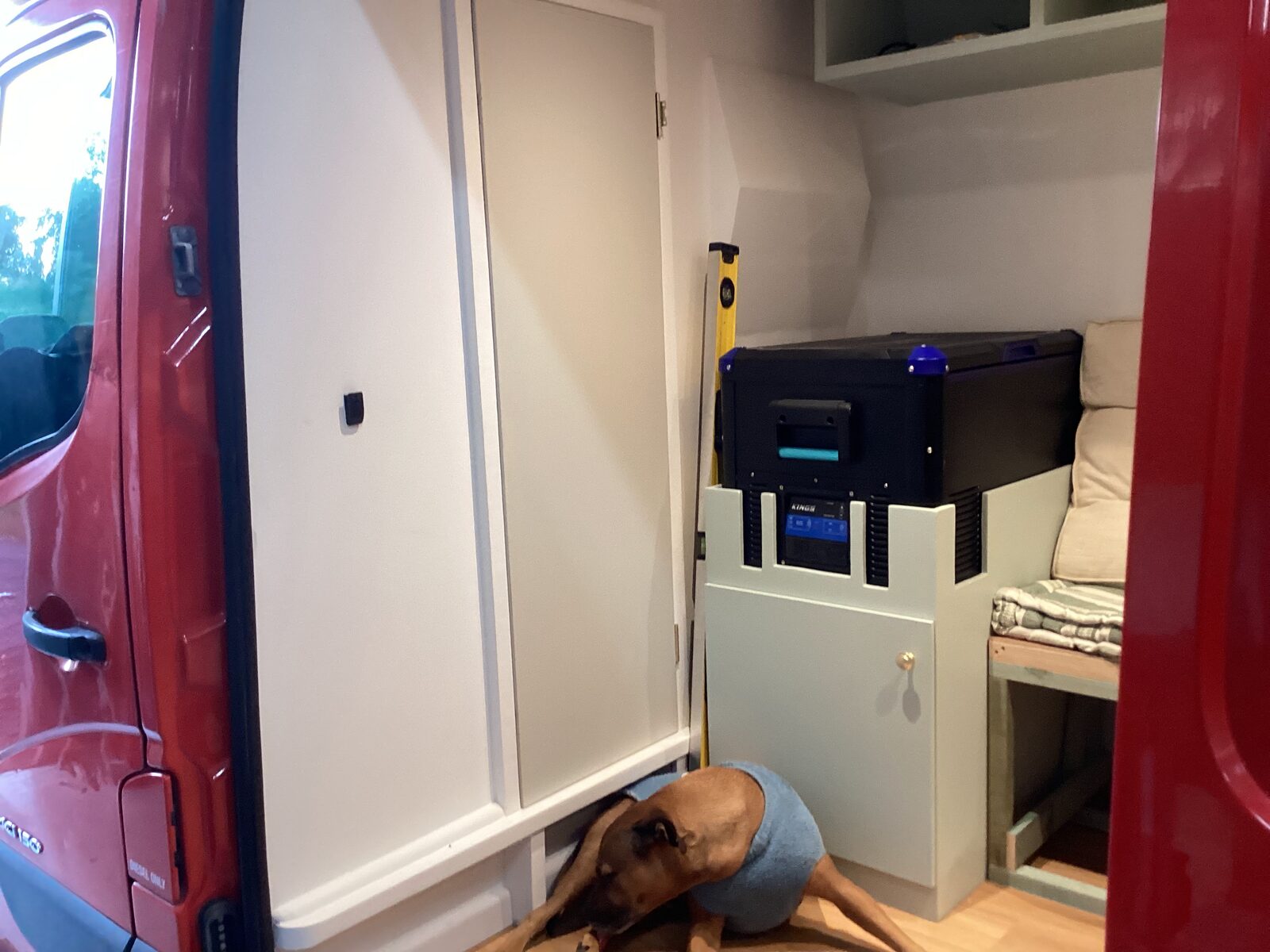
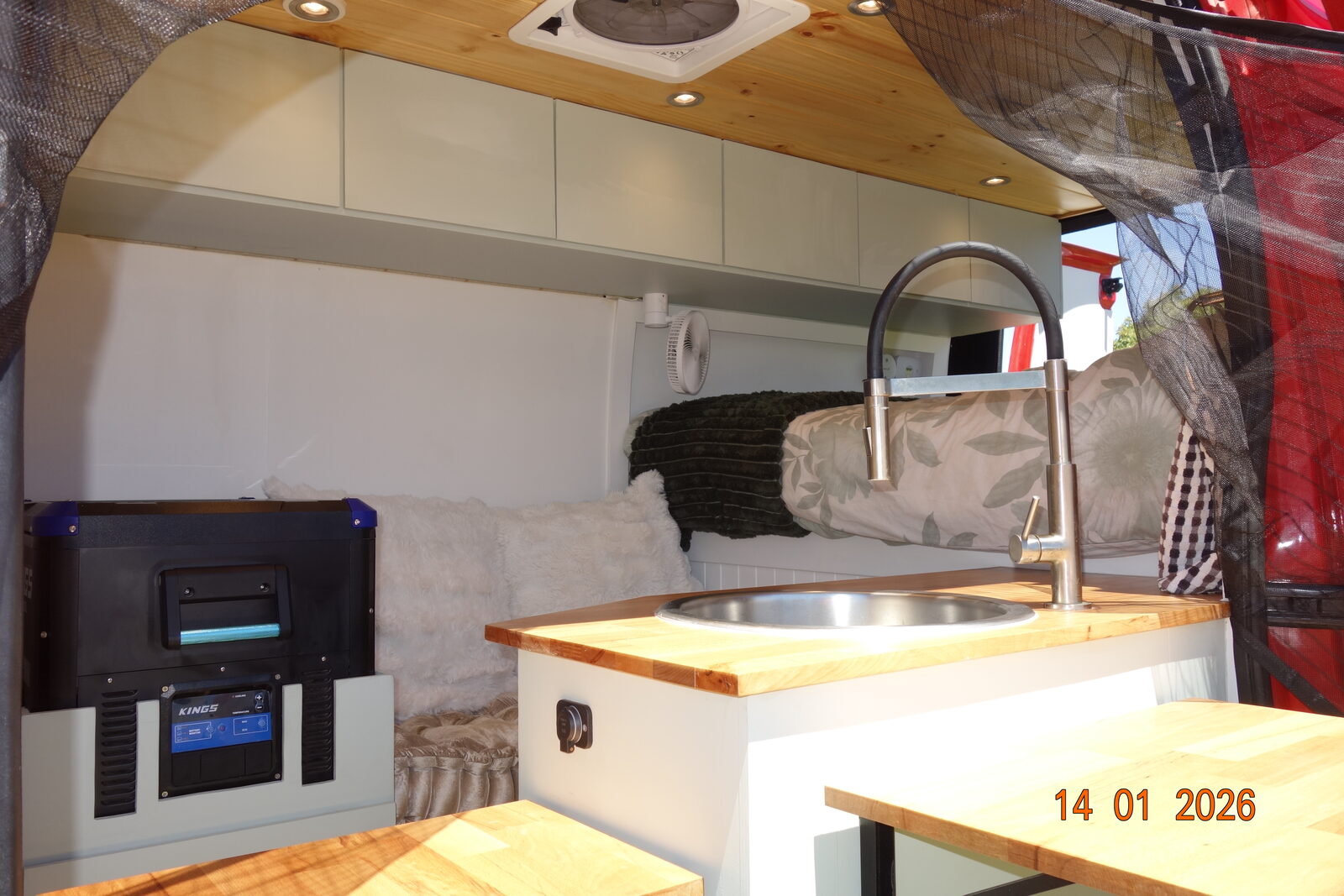
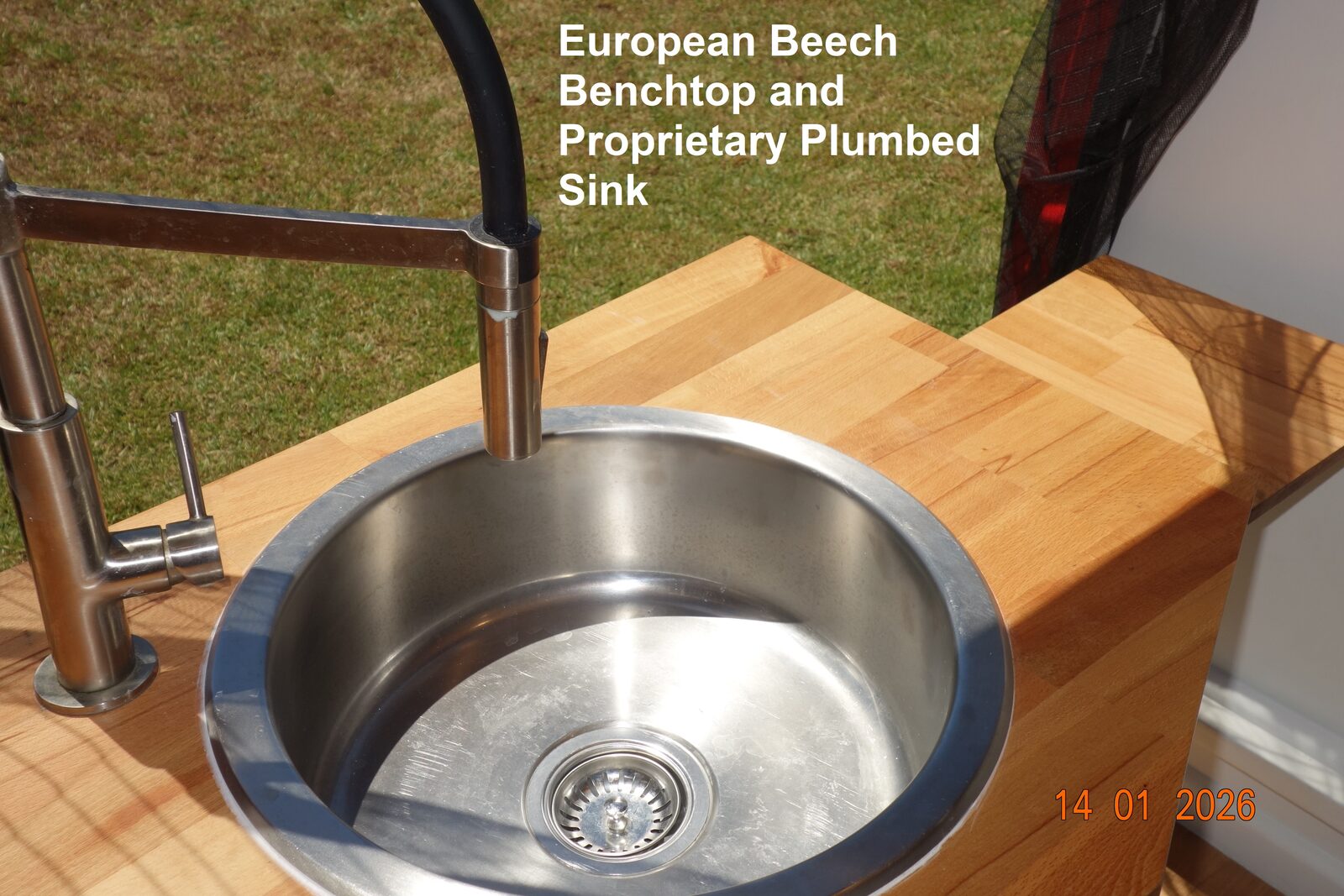
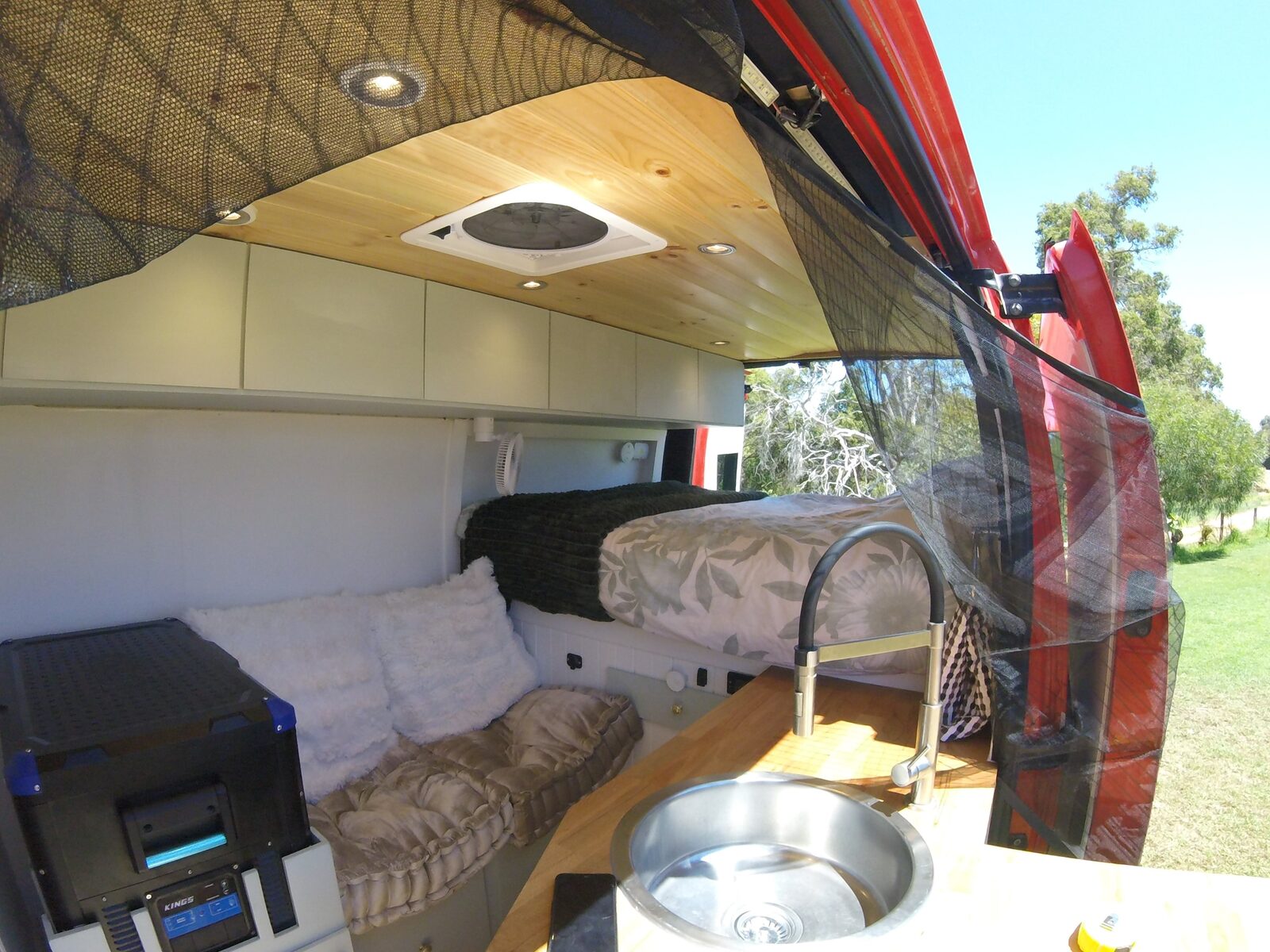
Painted plywood cabinetry, European beech benchtops, and a tongue-and-groove timber ceiling. A door was fitted between the cab and the living area.
-
Kitchen bench from the side door. -

Beech benchtop. -
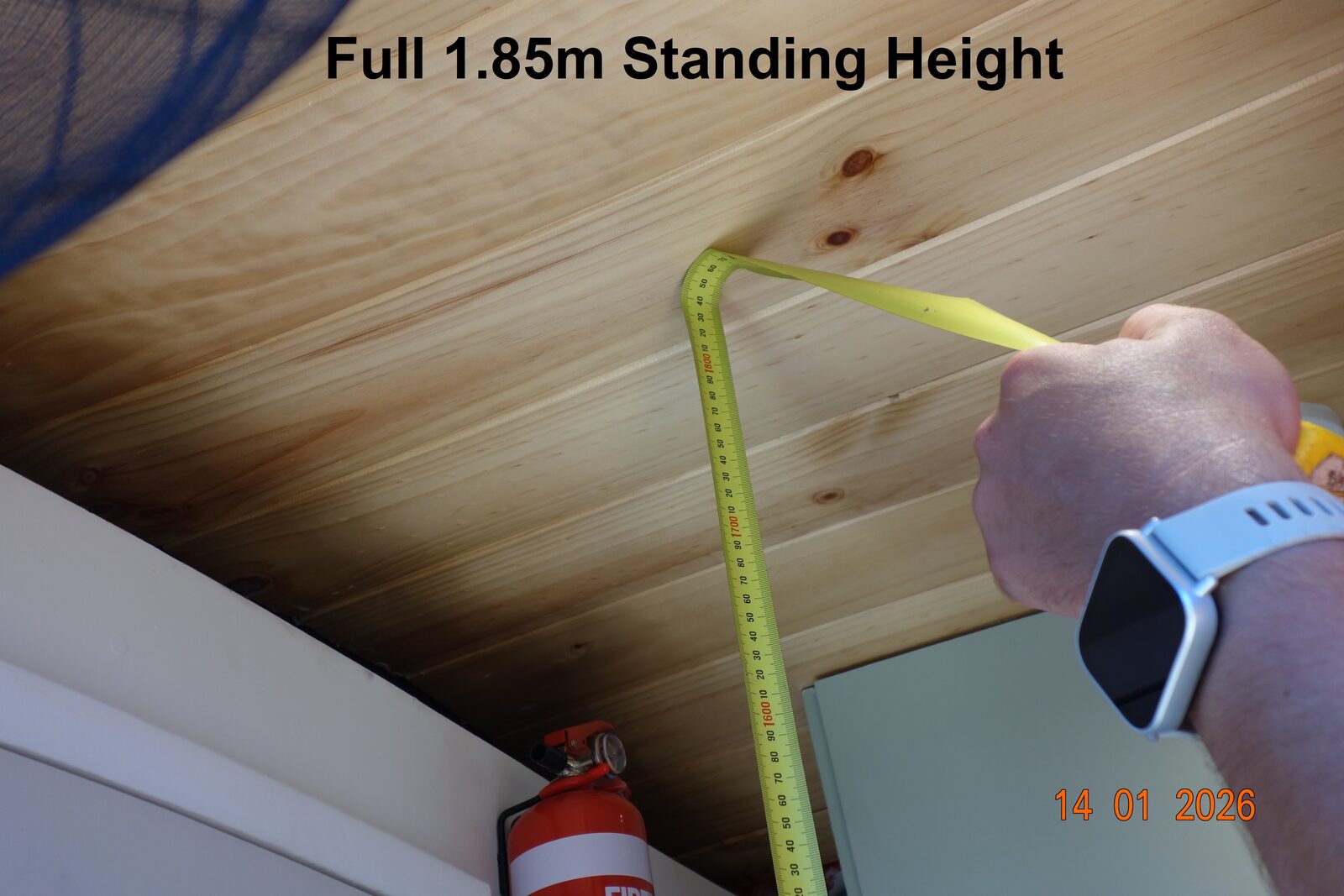
Measured standing height under the lined ceiling. -
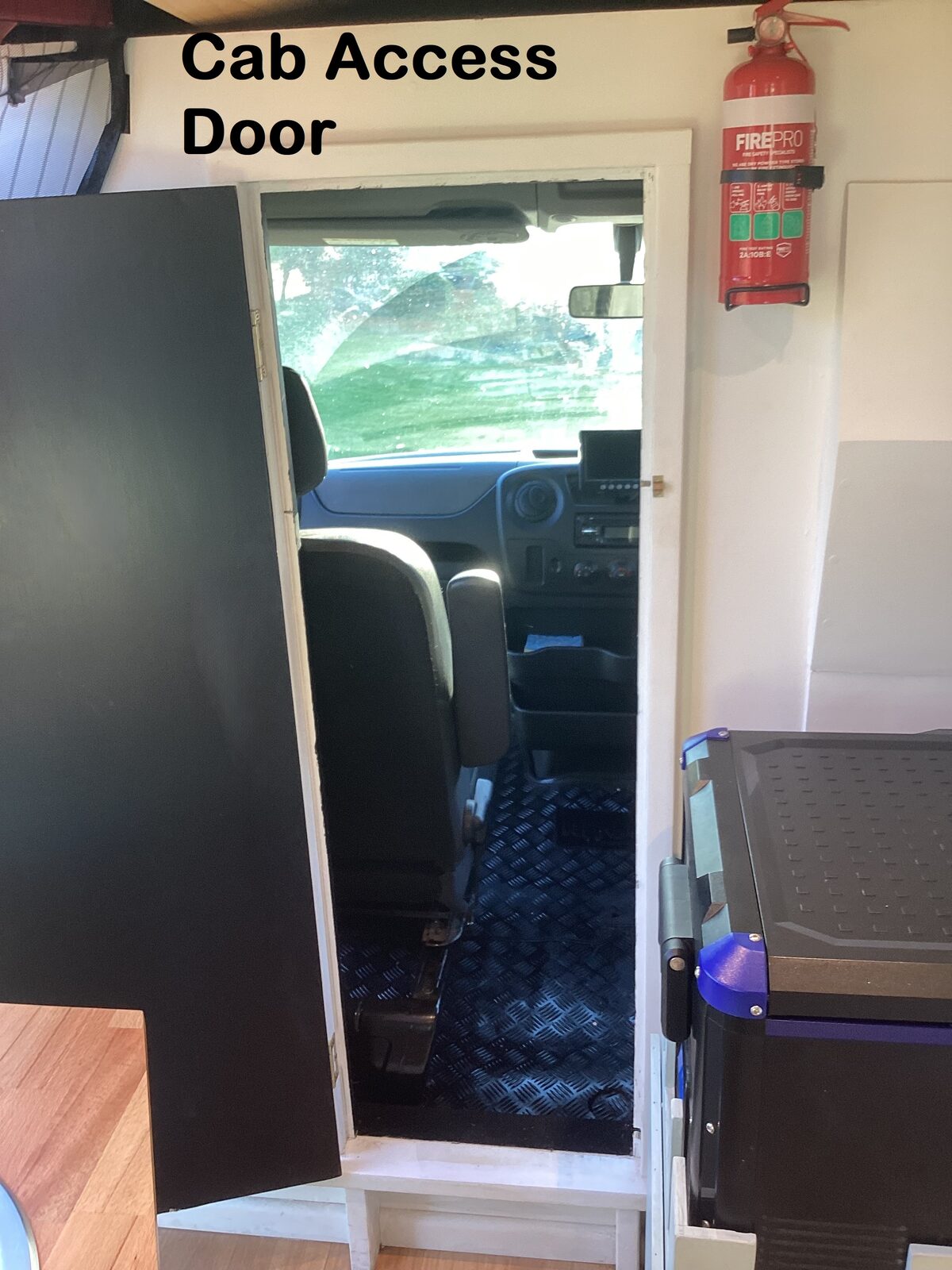
Door through to the cab.
Sleeping and seating
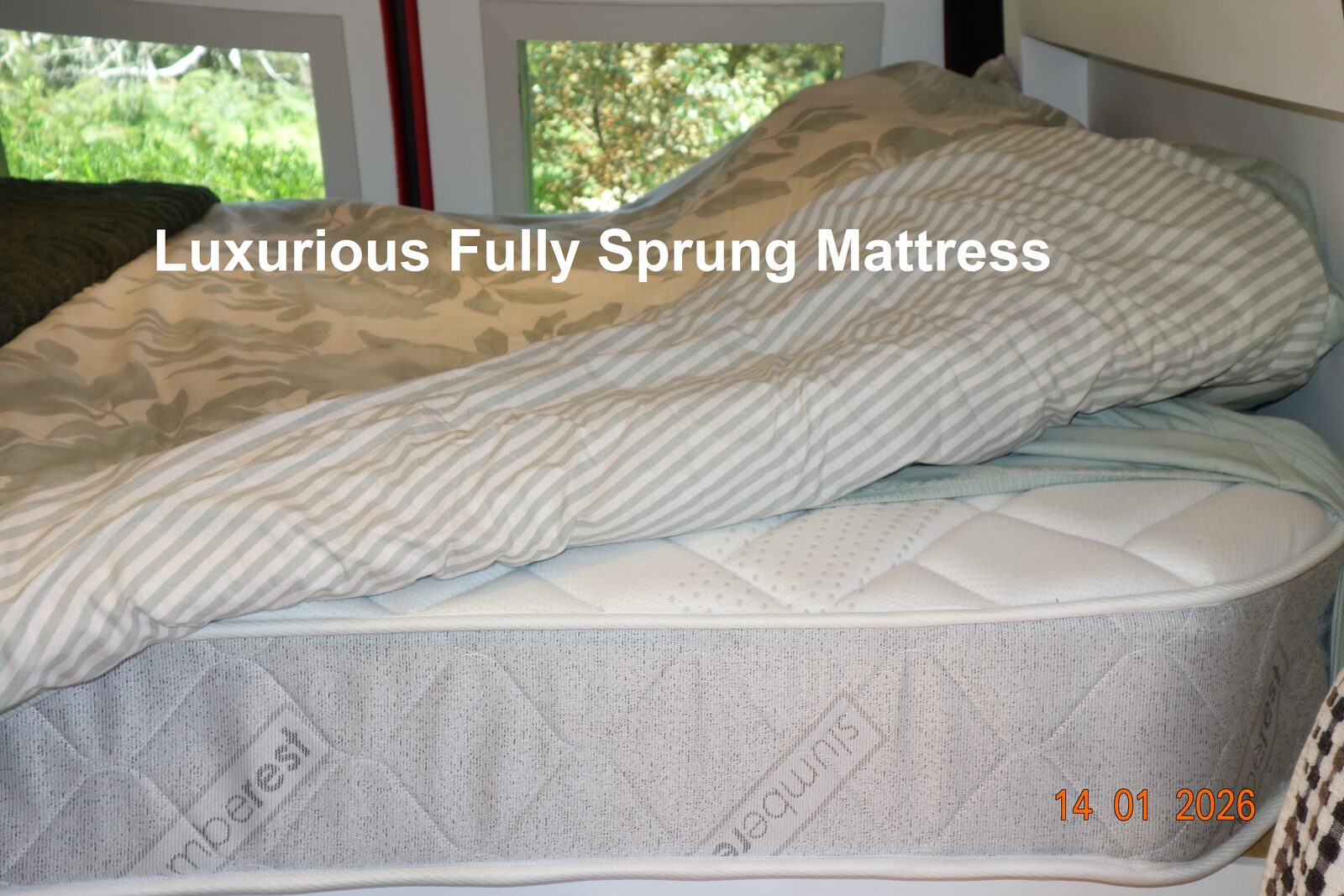
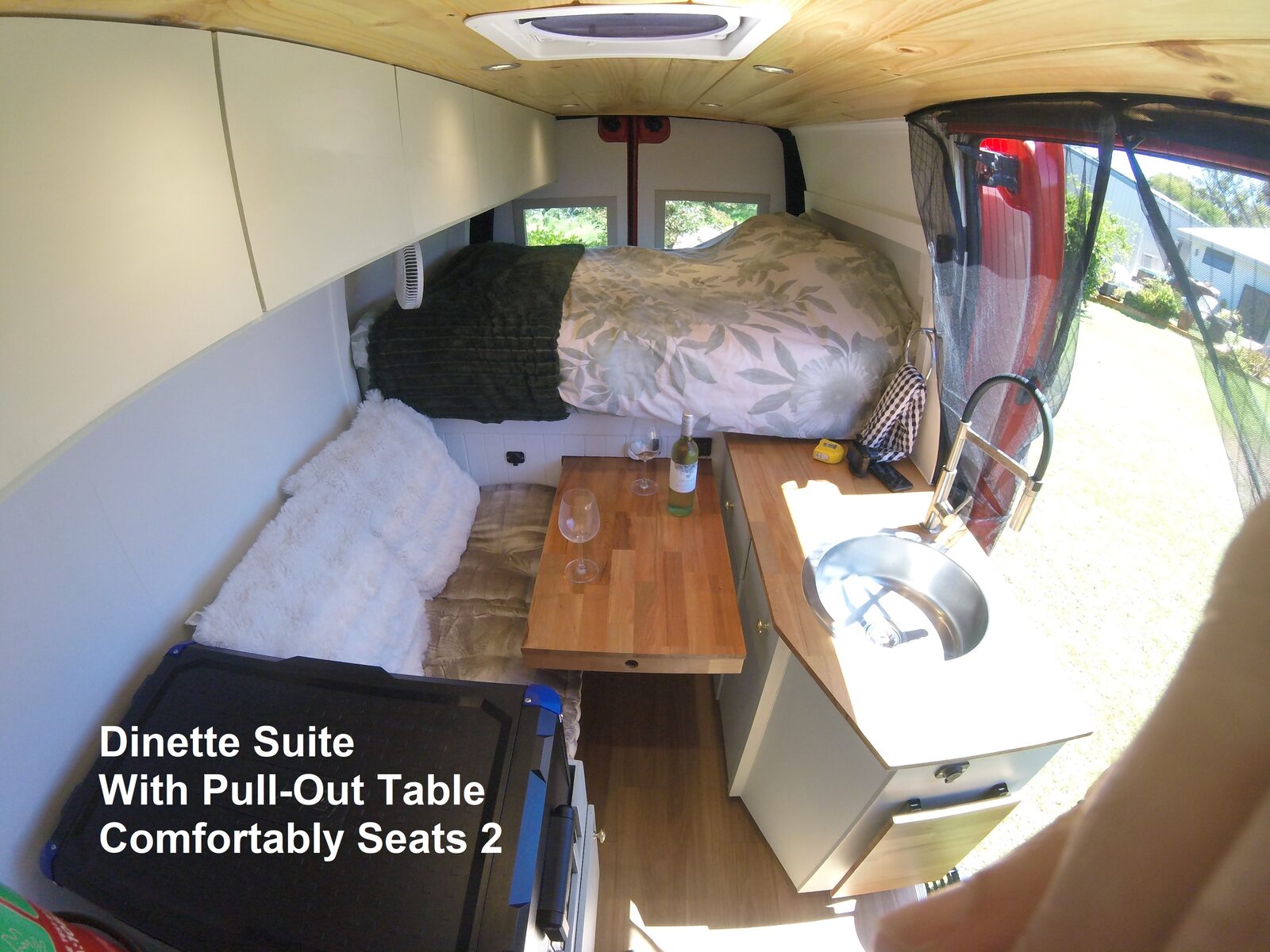
A fixed double bed on a frame across the back, with a sprung mattress, so it needs no setting up. The whole space under it is open storage reachable from the rear doors, and there is a second storage area over the cab. The seating below the bed has a table that pulls out and stows.
-
Fixed bed. -
Seating and pull-out table. -
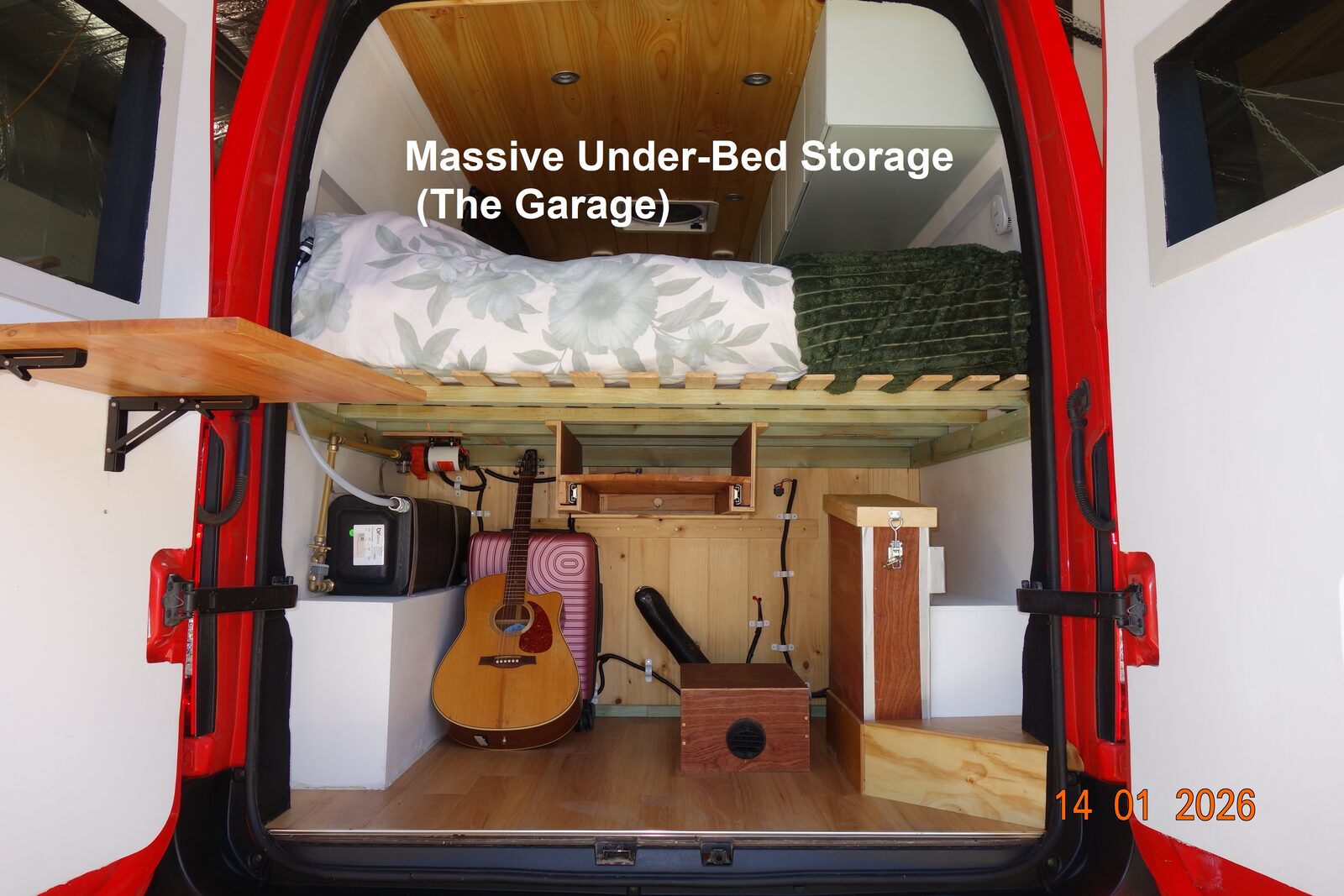
Storage under the bed, from the rear doors. -
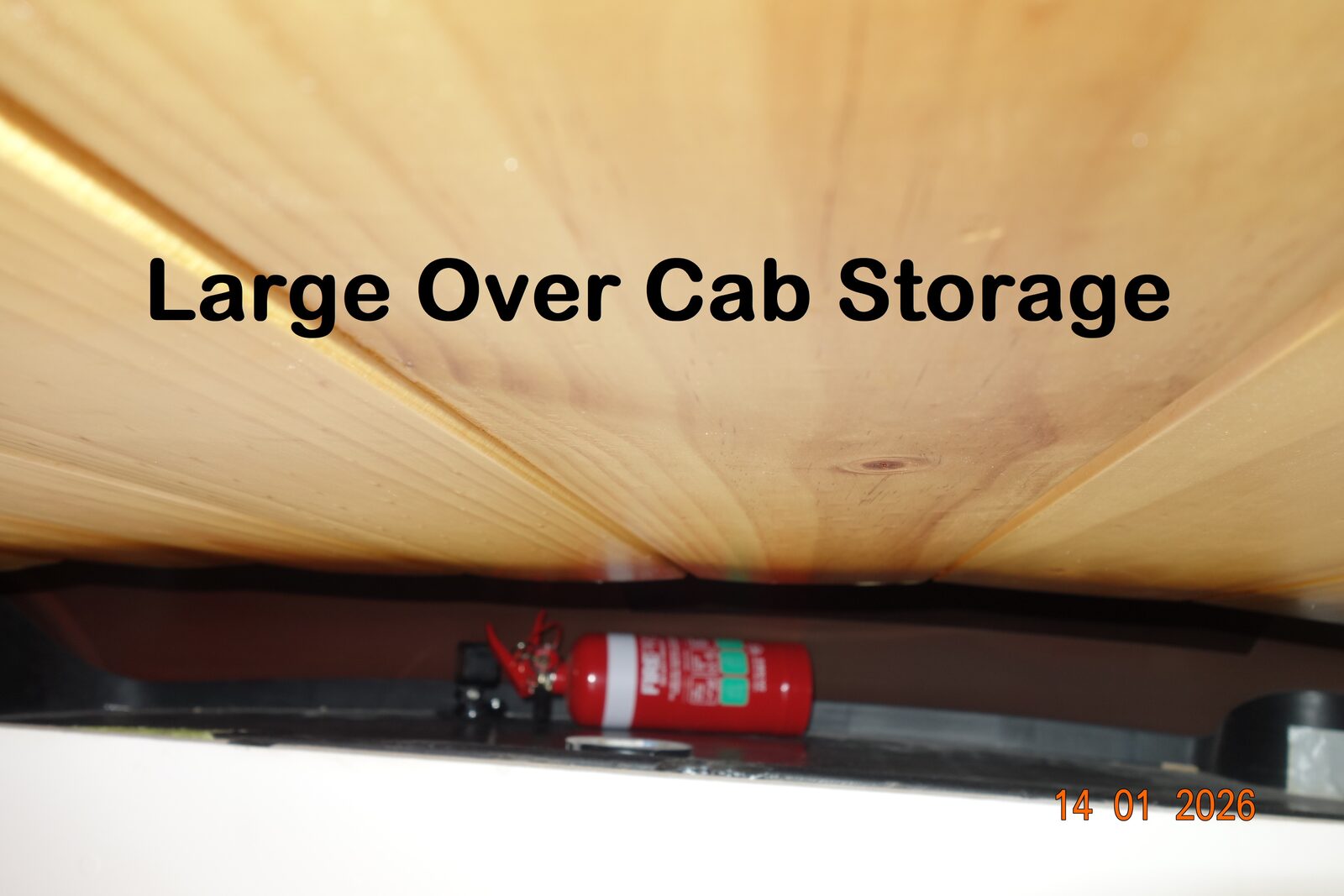
Storage over the cab.
Kitchen and water
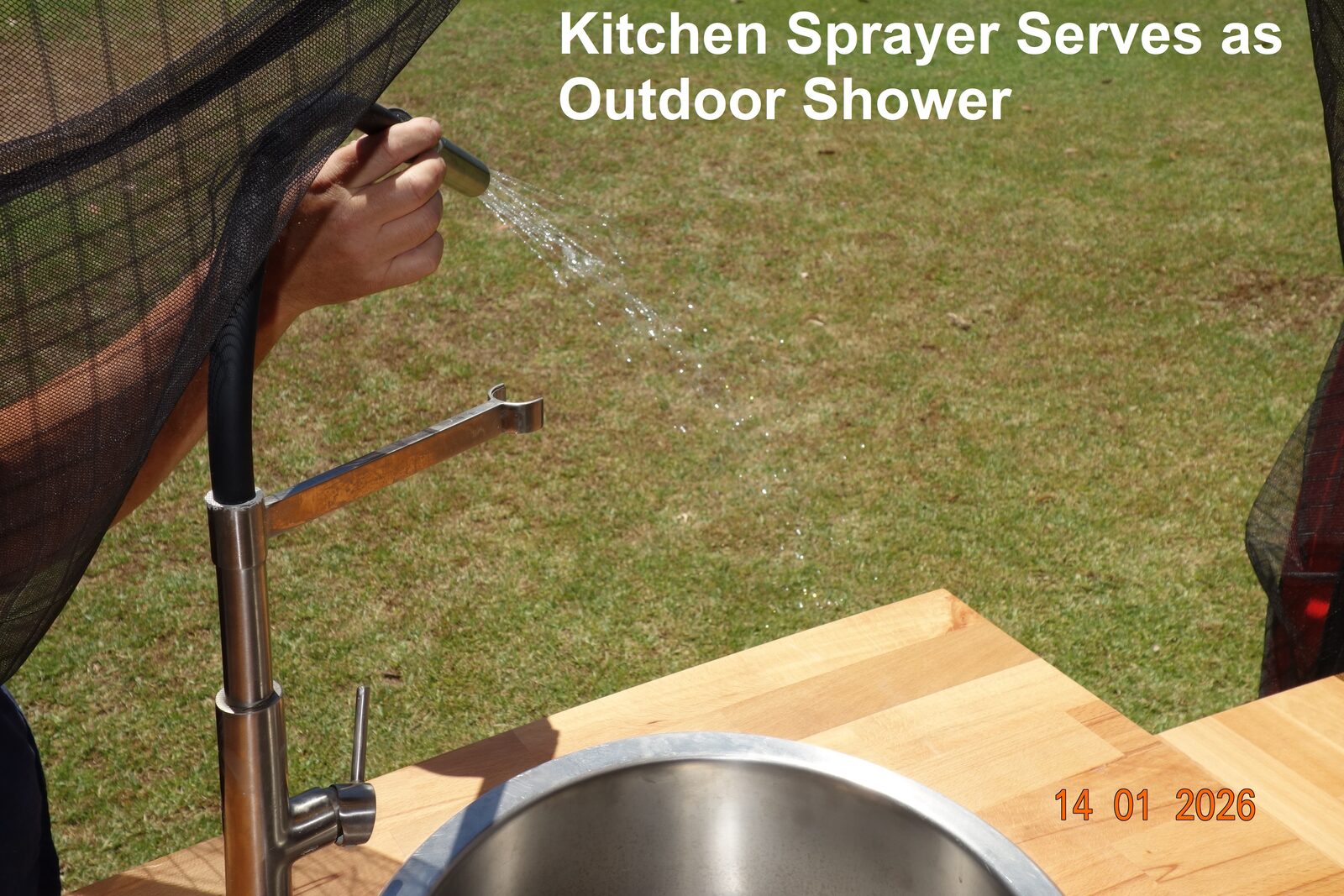
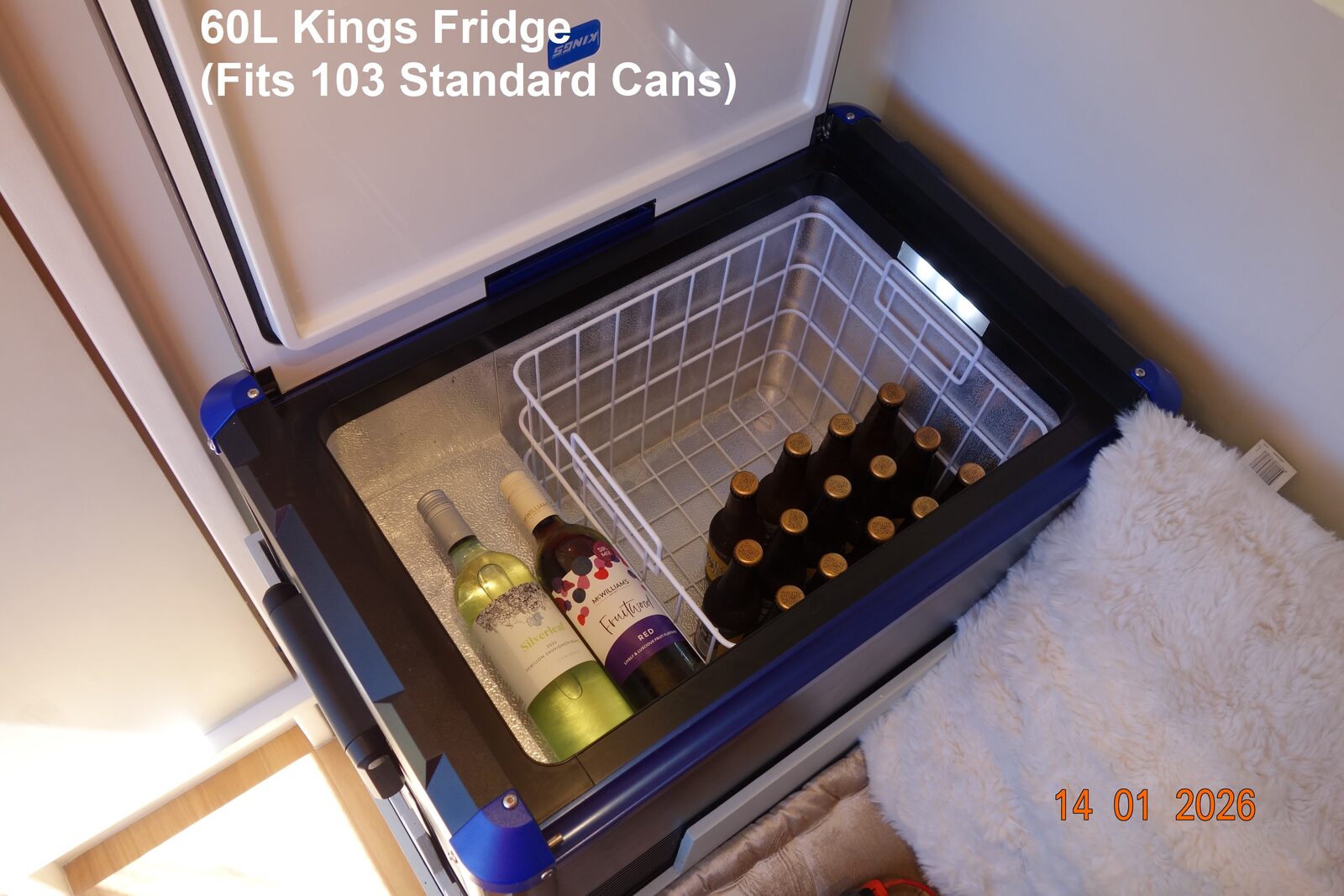
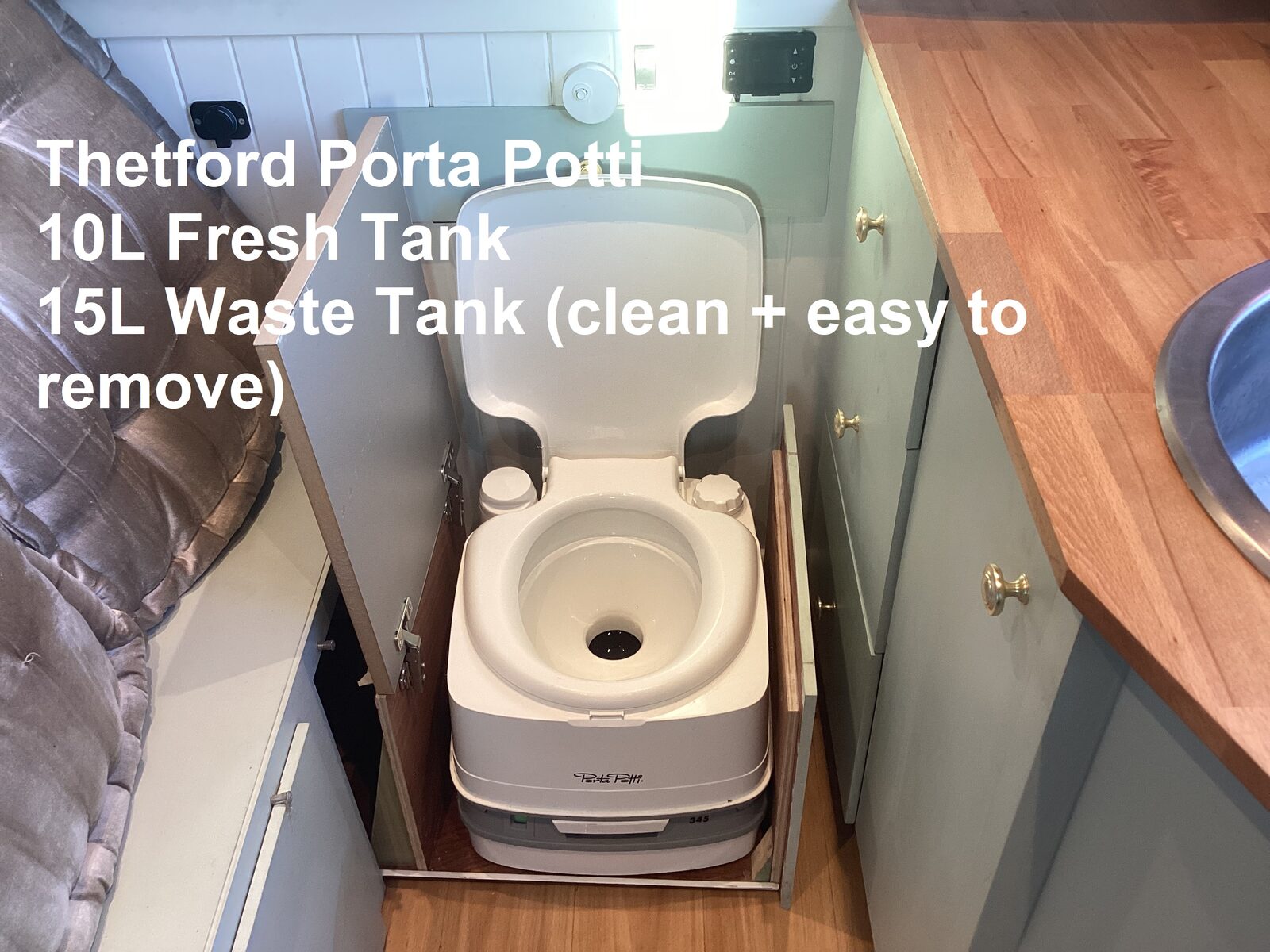
A stainless sink plumbed to a 40 litre fresh water tank, with a pull-out sprayer tap that reaches out the side door to wash at. A 60 litre compressor fridge, and a chemical toilet with its own 10 litre fresh and 15 litre waste tanks.
Power
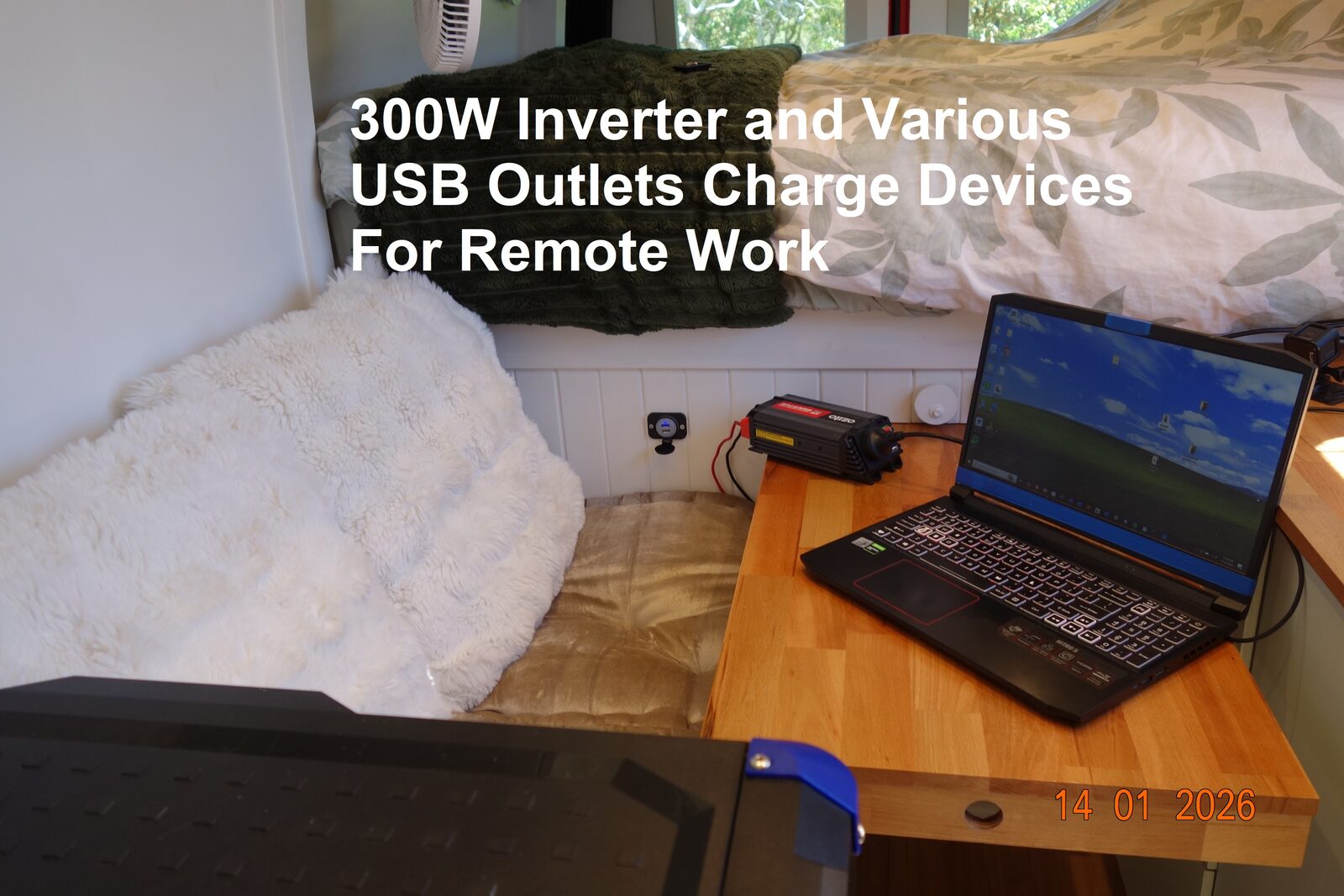
A 100 amp-hour battery in the back, charged off the engine's alternator through a voltage-sensitive relay so it only draws once the starter battery is full. A 300 watt inverter on an Anderson plug for mains sockets, and USB outlets through the living area. I ran 8 gauge UV-rated cable to the roof through sealed glands so panels could be added later without opening anything up again.
Heating and ventilation
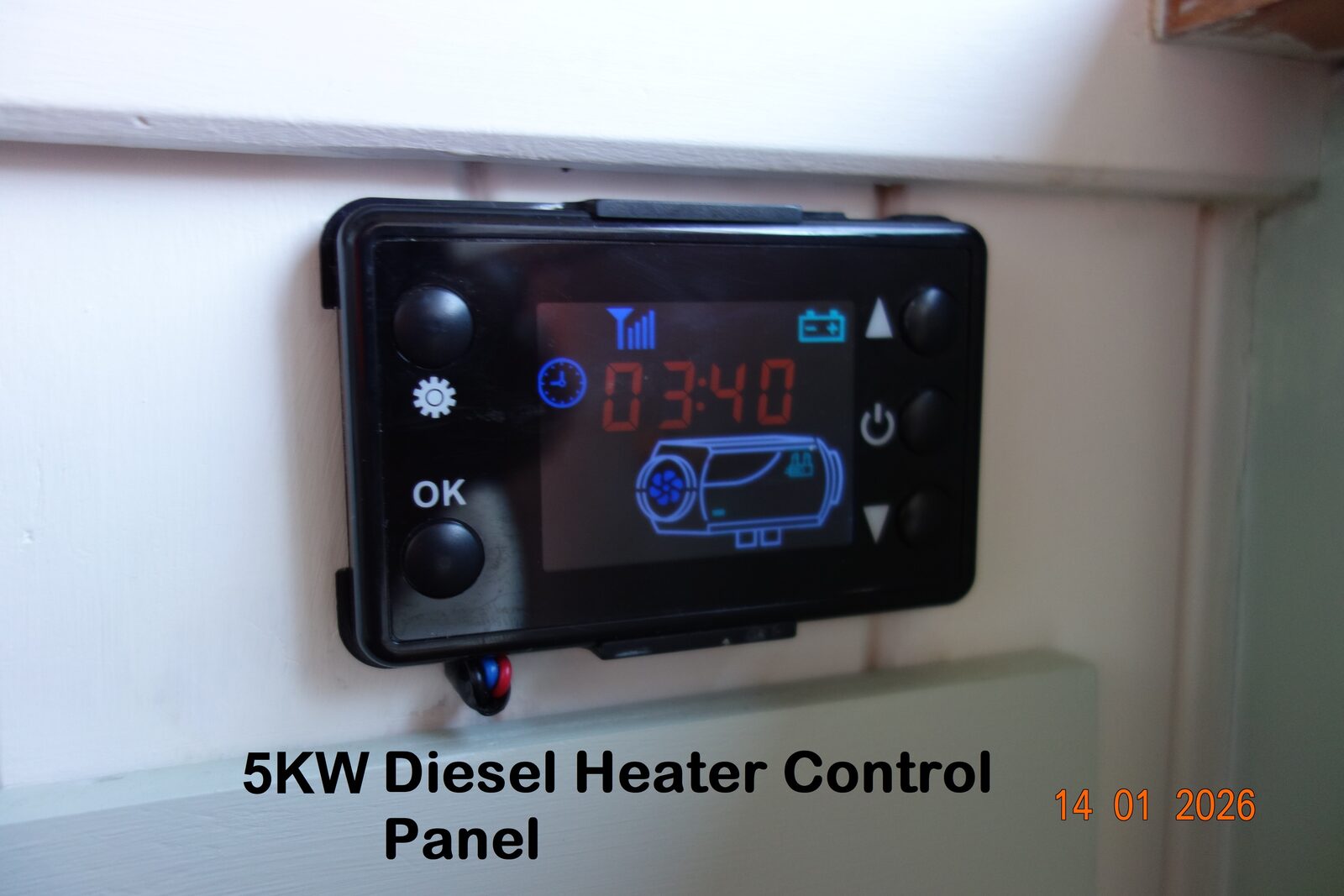
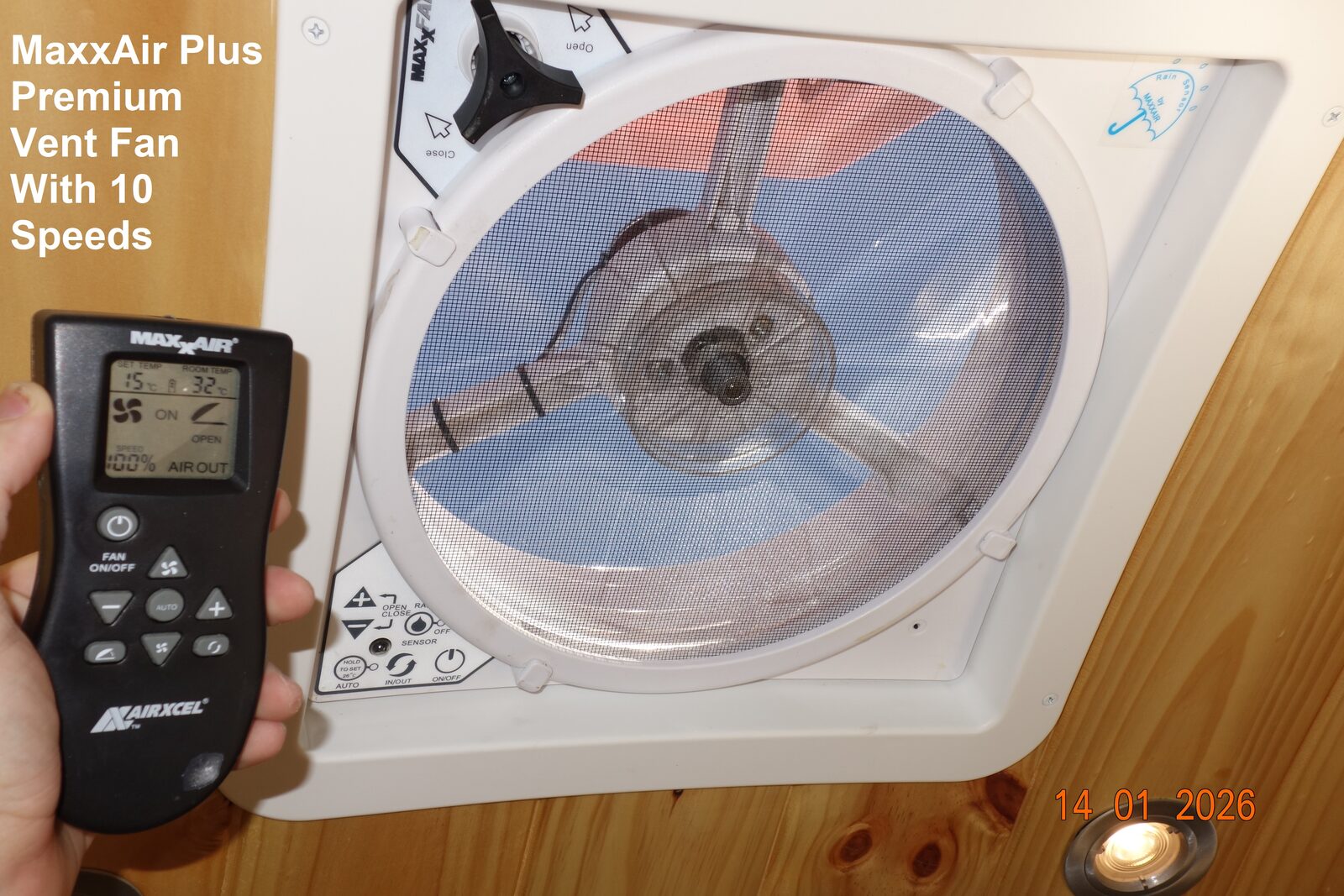
A 5 kilowatt diesel heater plumbed off the van's own fuel, and a ten-speed roof fan with a thermostat and remote that can pull air in or push it out.
Safety
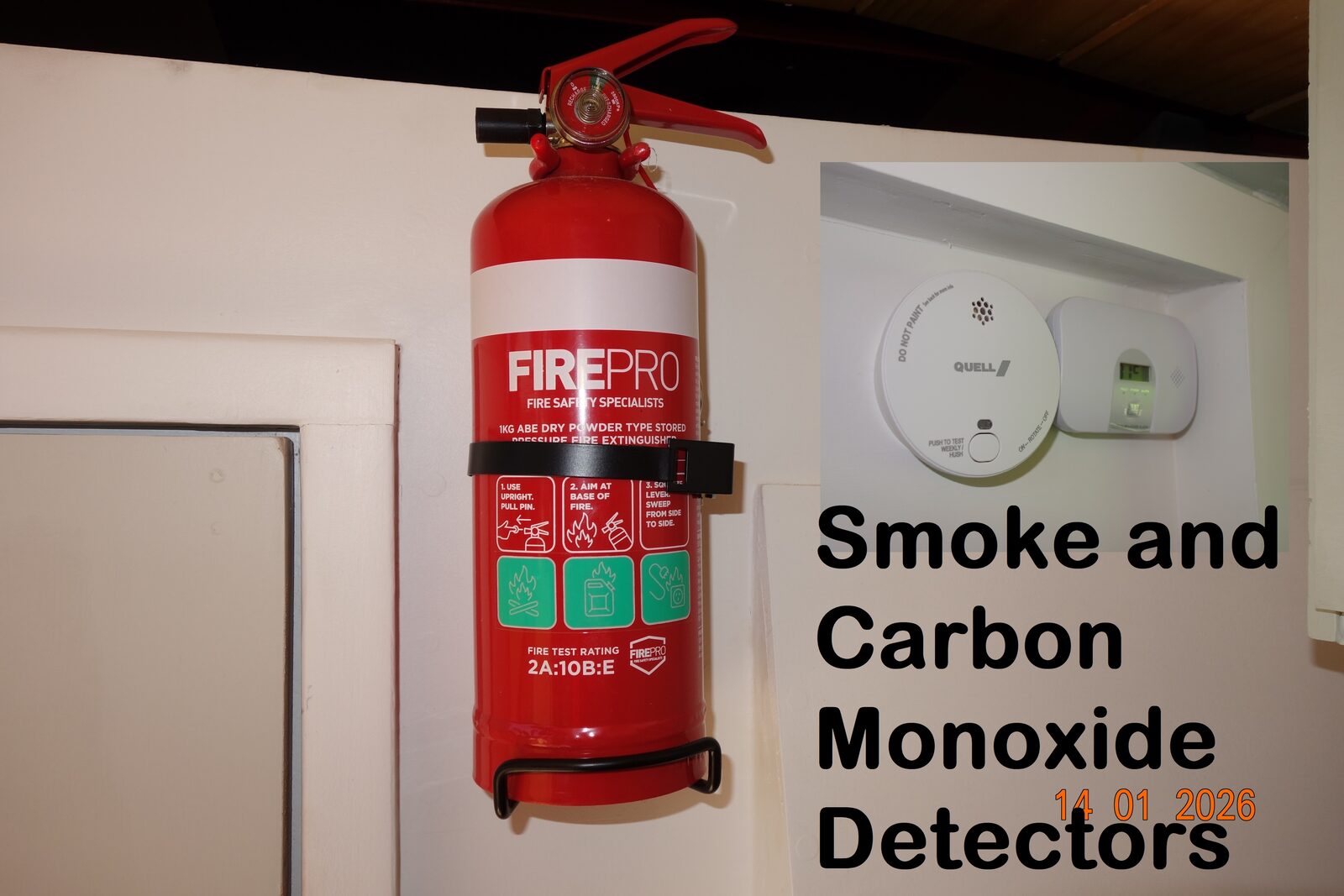
Smoke and carbon monoxide alarms, and a fire extinguisher mounted by the door — a diesel heater and a 12-volt system in a sealed metal box are both worth alarming.
Making it road legal
The van came with one seat and no registration. I fitted a passenger seat and belt, had the fitment inspected, and it was licensed as a two-seater under a Western Australian Department of Transport modification approval permit, which passes to the next owner with the vehicle. It then went through a roadworthy inspection and was registered.
Testing it
A van that has been apart and put back together is not proven until it has been somewhere. I ran three long-distance trips in it, the longest a 4,000 kilometre return drive to Darwin.
That trip found a fault. The clutch on this gearbox is operated by a concentric slave cylinder that sits inside the bellhousing, so reaching it means dropping the gearbox out — not something to attempt on the side of the road, and the reason the part is a known weak point on these vans. I had it done properly in Katherine, in the Northern Territory, with the parts freighted up to Darwin: gearbox out, slave cylinder replaced, clutch bled, fault codes cleared, and a test drive afterwards. It was fixed in November 2025.
Testing the van for reliability was a big reason for the extended trip.
Afterwards
It sold, and I hope the new owner is getting good use out of it. I'll never forget what I learned building it, and I hope you enjoyed me sharing it here.